About Kyocera Connectors

Since 2003, Kyocera has applied materials science, precision manufacturing, and rigorous testing to the challenge of reliable interconnection — now spanning 125+ patents and 52 countries.

"We believe that every decibel of insertion loss and every degree of temperature tolerance matters. Our mission is to engineer connectors that perform at specification limits — not just meet them — across the full operating lifecycle."

— Kyocera Connectors Engineering Team

Company at a Glance

2003 Founded
620 Employees
52 Countries Served
125+ Patents

R&D and Testing Facilities

Our 78-person engineering team operates across three specialized laboratories.
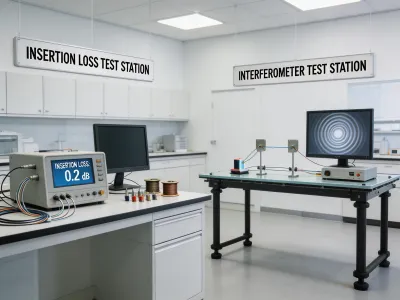
Optical Testing Lab

Optical Testing Lab

Interferometric endface analysis, insertion loss / return loss characterization, and accelerated aging chambers for fiber connectors.
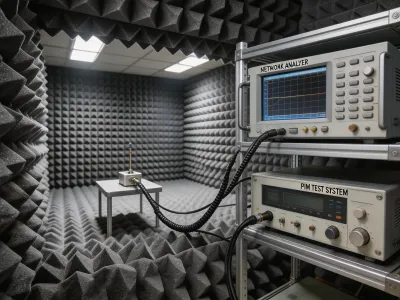
RF Testing Lab

RF & PIM Test Lab

Anechoic chamber for antenna pattern measurement, PIM test to -160 dBc, and vector network analysis up to 67 GHz.
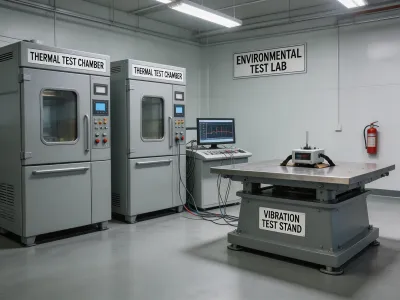
Environmental Test Lab

Environmental Qualification Lab

Thermal cycling (-55°C to +125°C), salt spray, vibration, mechanical shock, and IP protection testing per MIL-STD-810G.

Key Milestones

2003

Kyocera Connectors Division established in Kyoto, Japan, leveraging parent company's fine ceramic manufacturing expertise to enter the fiber optic connector market.

2008

Opened dedicated PIM testing laboratory and launched RF connector product line. Achieved IATF 16949 certification for automotive-grade connector manufacturing.

2015

Expanded manufacturing to Penang, Malaysia facility. Surpassed 50 million cumulative connector units shipped. Introduced MPO/MTP product family for data center applications.

2021

Commissioned 67 GHz vector network analyzer for millimeter-wave connector characterization. Annual production capacity reached 85 million units across three manufacturing sites.

Technical Publications

Application notes and white papers from our engineering team.

Minimizing Insertion Loss in Multi-Fiber Push-On (MPO) Connector Systems

Analysis of endface geometry parameters and their impact on aggregate insertion loss in high-density data center trunk cables.

PIM Source Identification in Multi-Carrier RF Connector Assemblies

Methodology for isolating passive intermodulation sources in connector interfaces, with case studies from 4G/5G base station deployments.

Ceramic vs. Stainless Steel Ferrules: A 10-Year Reliability Comparison

Long-term field data comparing zirconia ceramic and stainless steel ferrule performance across temperature, humidity, and mating cycle metrics.

Join Our Engineering Network

Connect with our technical team for application support, product updates, and access to our full technical documentation library.

Contact Us